
Recovering traditional chestnut groves is an opportunity for the rural environment and biodiversity. That is why this week we have participated in El Bierzo (León) in the international scientific-technical event of reference on chestnut trees, BioCastanea, presenting the progress and actions of our project ‘Chestnuts, Bears and Rural Development’.
The chestnut tree is a multifunctional tree, and traditional chestnut groves are a perfect example of harmony between human activities and nature conservation. Recovering traditional chestnut groves has many benefits:
▪️ support the socio-economic development of rural areas, creating green employment opportunities and boosting the forest bio-economy.
▪️ providing a secure autumn food resource for bears, forest birds and many other species
▪️ improving the adaptation of the Cantabrian mountain range to climate change scenarios
▪️ preserve ancestral chestnut tree varieties
The ‘Chestnuts, Bears and Rural Development’ project seeks to recover, expand and enhance the value of traditional chestnut groves in the Cantabrian Mountains to generate bioeconomy and rural development and contribute to the conservation of the brown bear and biodiversity.
María Párraga, the project coordinator of the Brown Bear Foundation (FOP), explained it in a talk that can be seen here (in spanish):
The initiative is running until December 2025 and, during the first months of action, work has focused on developing stewardship agreements with the owners (private and public) of the chestnut groves widely spread throughout the bear territory where recovery treatments will be carried out: the aim is to intervene in 36 chestnut groves, of about 3 hectares each.
Generation of green and local jobs
A key point of the project is to turn the chestnut groves into an engine for the generation of qualified green and local employment. The abandonment of traditional chestnut groves in a large part of the Cantabrian Mountains has led to a loss of activities and management know-how. This project aims to recover this knowledge and skills, while promoting interest in the improvement, care and maintenance of these rich agroforestry systems.
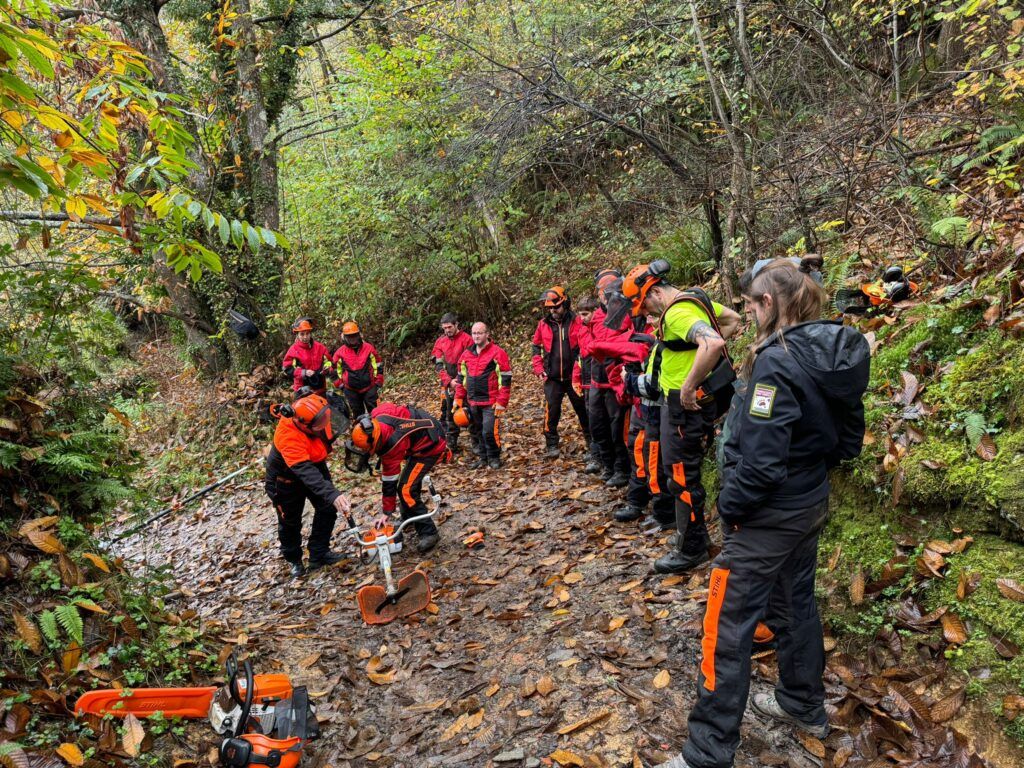
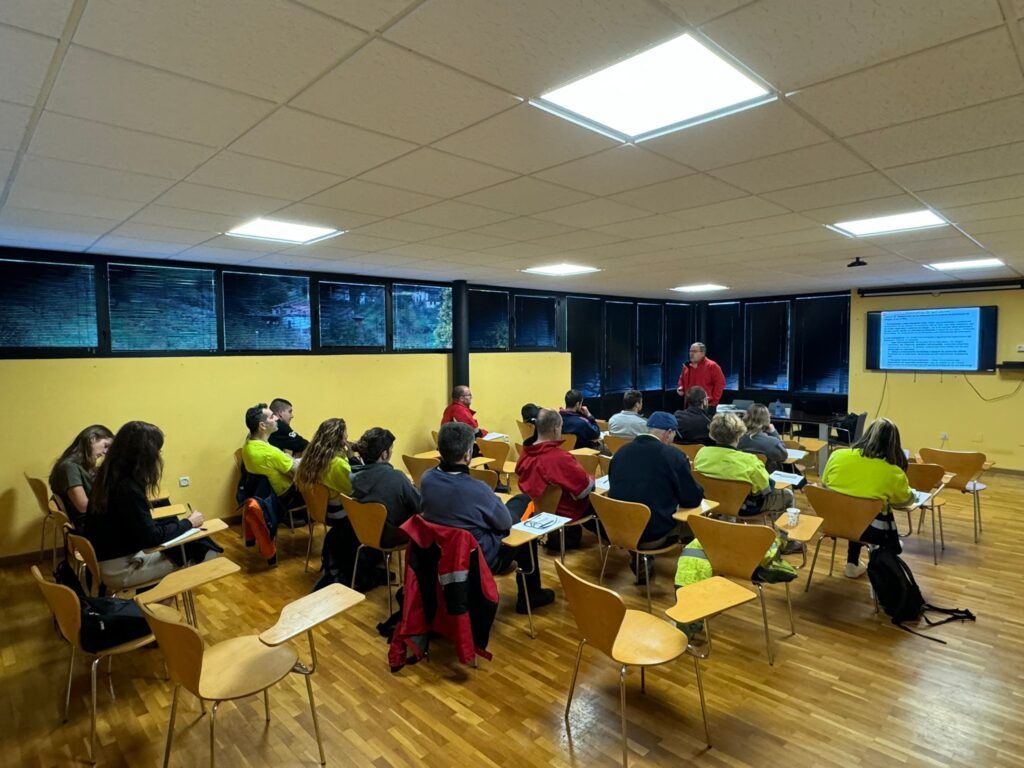
The people hired to carry out the forestry work of the project are residents of the municipalities of action, and will be trained intensively and continuously, which will provide them with a highly qualified professional profile beyond the project. On Monday, the first of the training courses was held in Tineo (Asturias), with 14 of the project workers, focusing on the safe use and handling of the tools to be used by the work teams when conditioning the chestnut groves (chainsaw, pole-axe, brush cutter and chipper).
The Chestnuts, Bears and Rural Development project is supported by the Biodiversity Foundation of the Ministry for Ecological Transition and the Demographic Challenge (MITECO) within the framework of the Recovery, Transformation and Resilience Plan (PRTR), funded by the European Union – NextGenerationEU. It is also supported by the Principality of Asturias and the Caja Rural de Asturias Foundation.
Coordinated by the FOP, project partners include the University of Oviedo, SEO/BirdLife, the Asturias Bear Foundation and the Camino Lebaniego Foundation.