
Chestnut groves are a cultural and natural treasure of the Cantabrian Mountains that are highly threatened due to the abandonment of traditional uses, the incidence of pests and diseases, and rural depopulation. To enhance their role as an ecosystem that generates bioeconomy and rural development, the Brown Bear Foundation (FOP) will lead a project that will recover and enhance the value of traditional fruiting chestnut groves in bear areas of Asturias, Cantabria and Castilla y León. In a context of climate change, these forests will play a key role in the future of the Cantabrian brown bear as a secure and stable food source.
Coordinated by the Brown Bear Foundation (FOP), the ‘Chestnuts, bears and rural development’ project is supported by the Biodiversity Foundation of the Ministry for Ecological Transition and the Demographic Challenge (MITECO), with a total budget of 2,026,790.40 euros. The University of Oviedo, SEO/BirdLife, the Asturias Bear Foundation and the Camino Lebaniego Foundation are participating as partners, and it will run until December 2025, within the framework of the Recovery, Transformation and Resilience Plan (PRTR), financed by the European Union – NextGenerationEU.
Involving the inhabitants of the Cantabrian Mountains’ bear areas, the project will enhance the value of the traditional chestnut groves – which are suffering a strong process of abandonment – with the intention of recovering them, improving their health and vitality, and increasing fruit production.
The goal of the project is to recover 108 hectares of these forests in Asturias, Cantabria and Castille and León, a service that will be offered free of charge to public and private landowners in the areas of action. It will also plant 12,000 trees grafted with traditional and local varieties, some of which are at high risk of disappearing.
In Castille and León, the project will work in the León municipalities of Palacios del Sil, Páramo del Sil and Villablino. In Asturias, efforts will concentrate on the councils with the highest density of bears, in the west and centre. And towards the east of the Cantabrian Mountains, work will be carried out in the Liébana valley in Cantabria.
In addition to the creation of green jobs and rural revitalisation, prioritising the hiring of women, the project will offer training to owners and forestry workers on the management and handling of chestnut trees, the fight against pests and diseases, and marketing processes and channels. Chestnuts are a healthy food and a forest product with high added value, with great potential as a driver of rural development.
The chestnut tree, key to the future of the Cantabrian brown bear
In autumn bears roam the forests in search of nuts such as acorns and beechnuts, a vital source of fat for hibernation. The production of the oak and beech forests of the Cantabrian Mountains varies from year to year, but well-preserved and managed chestnut groves produce fruit much more consistently, autumn after autumn: chestnuts are therefore a safe, nutritious and energetic food in the diet of the plantigrade.
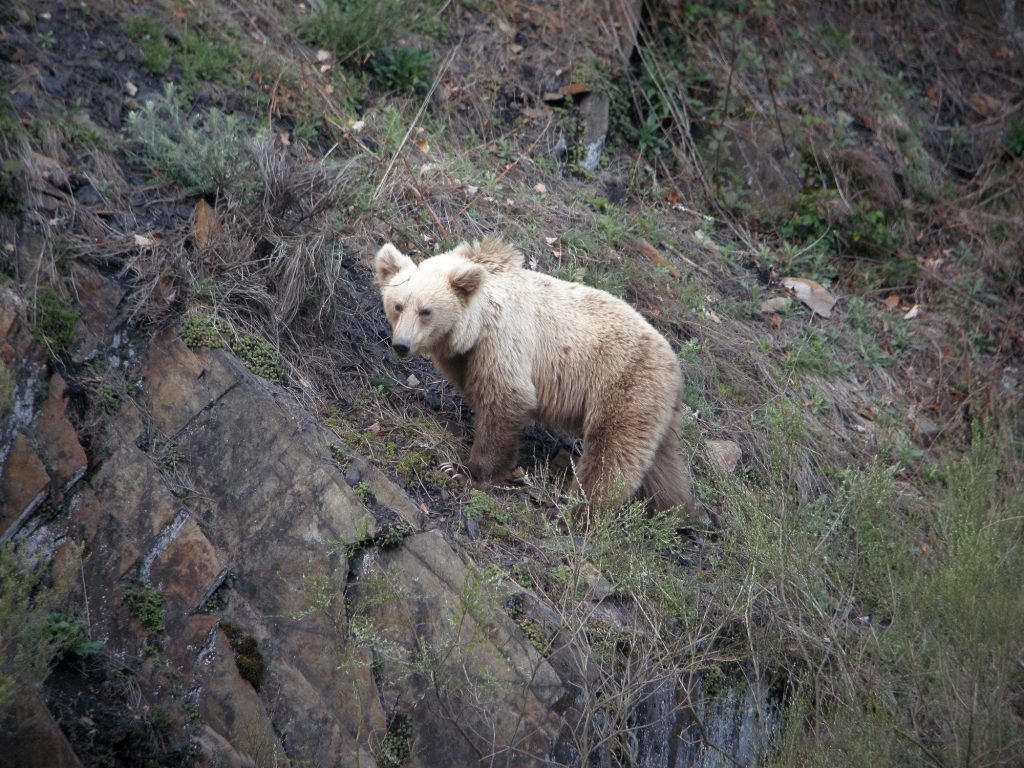
This relationship will become increasingly important in the future, as the chestnut tree, which is thermophilic in nature, is one of the trees that is resilient to climate change in the Cantabrian Mountains. According to several scientific studies, chestnut trees will be able to expand their optimum habitat to higher altitude areas. They will therefore be key to the conservation of the bear and other species that feed on fruit, such as forest birds. These, in turn, provide important ecosystem services, such as biological control of insect pests that can affect chestnut trees.
Along these lines, the project will contribute to improving scientific knowledge on traditional chestnut tree varieties, their conservation and management, their recovery potential and their suitability in the new climate scenario.
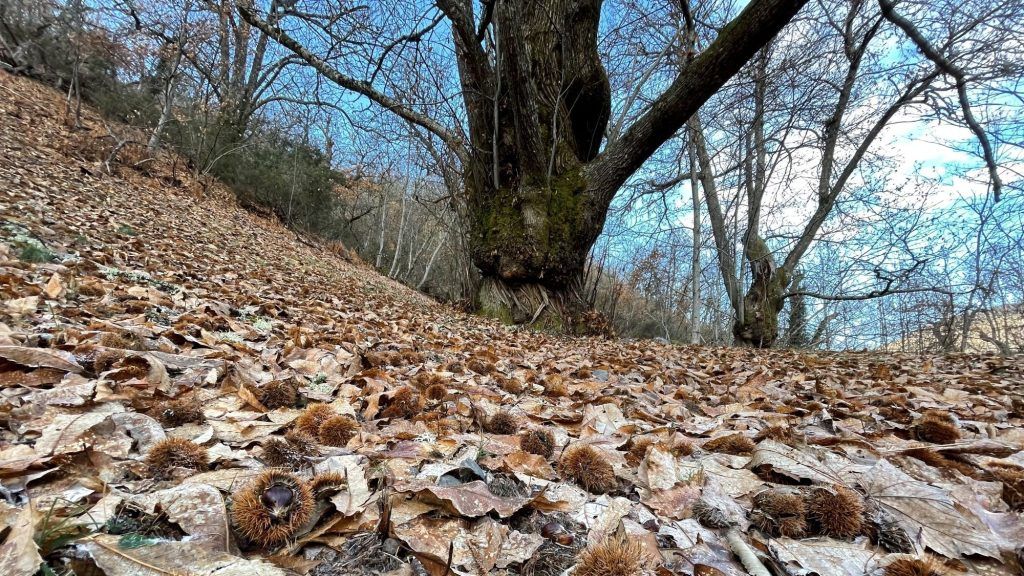
The project will highlight the link between bears and chestnut trees as a sustainable tourism asset. Three interpretative routes will be prepared and signposted in bear areas, and six corras, the traditional constructions used to preserve chestnuts, will also be restored.
In order to assess their social profitability and their importance for the well-being and development of the rural environment, an economic analysis of the ecosystem services generated by these landscapes is planned. Two studies will also be carried out on their importance for biodiversity, focusing on forest birds and the conservation of bears.